
Pet Care Journal: Early Warning Signs Every Pet Owner Should Note

Most health problems owners notice late were visible earlier — not as symptoms, but as small changes against a baseline nobody had written down. This entry is an observation log rather than a diagnosis guide. It lists the changes worth recording, explains why each one is informative, and states plainly when an observation should be handed to a veterinarian instead of watched for another week.
Why a written record beats memory
Memory compresses gradual change. An animal that has lost weight over six weeks looks normal today, because you have seen it every day. A number written down weekly does not compress. The same applies to water intake, which shifts slowly enough that owners routinely underestimate it.
The record does not need to be elaborate. Four columns — date, weight, meals refused, water noted — cover most of what a veterinarian will ask about.
What to record, and what each item tells you
| Observation | How to record it | Why it is useful |
|---|---|---|
| Body weight | Weekly, same scales, same time of day | The most objective trend an owner can collect |
| Appetite | Portions offered vs. portions eaten | Separates fussiness from a genuine decline |
| Water intake | Bowls refilled per day, noted qualitatively | A sustained rise or fall is a meaningful signal |
| Toileting | Frequency, consistency, any straining | Straining is a reason to seek advice promptly |
| Mobility | Same route, same time; note willingness to keep pace | Stiffness shows in behaviour before it shows in gait |
| Coat and skin | Weekly hands-on check, same order each time | Lumps, warmth and coat change are easier to find early |
| Breathing at rest | Occasional observation while the animal sleeps | Gives a reference for what is normal for that animal |
Weight: the trend, not the number
A single weight tells you very little. A series tells you direction. Weigh weekly at the same time of day, using the same scales — for cats and small dogs, a kitchen scale and a carrier work. Record the figure even when it looks unremarkable, because the value of the log is in the run, not in any single entry.
Appetite: measure what is offered
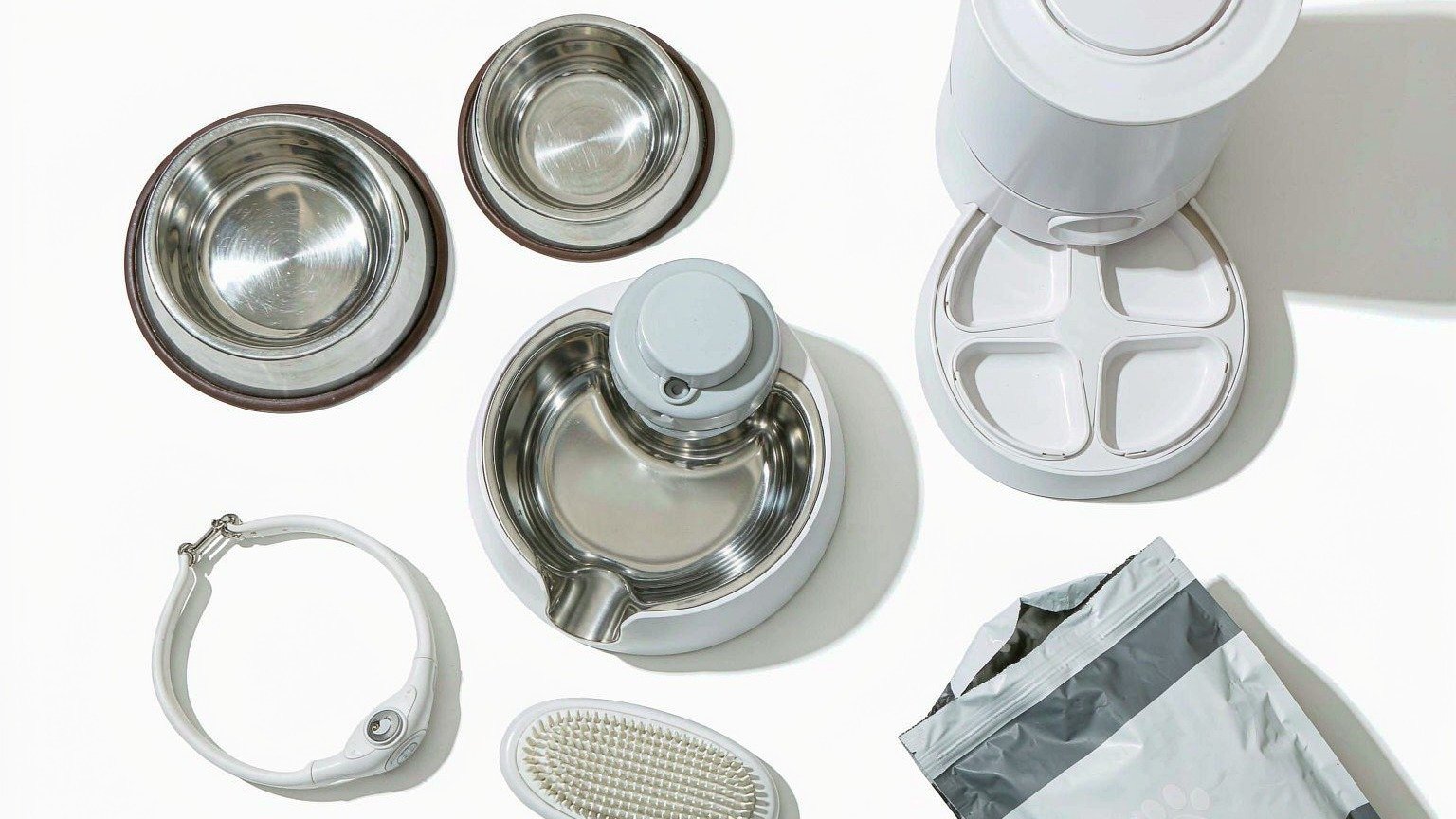
You cannot read appetite if food is always available. Measure portions, and record refusals against the amount offered. A scheduled feeder helps here for a different reason than convenience: it produces a fixed quantity at a fixed time, so a refused meal is a recorded event rather than a vague impression.
Our feeding models are listed under the smart feeder category. Portion range, meals per day and hopper capacity vary by model and should be confirmed per specification.
Water: the signal owners most often miss
Drinking is difficult to judge by eye because bowl levels are rarely noted. Emptying and refilling the bowl daily, rather than topping it up, produces a daily reading. Moving water also encourages intake in animals that drink reluctantly; circulating units are listed in the pet water fountain category, and the practical variables are pump replaceability and which parts can be immersed for cleaning.
Mobility: read behaviour, not just gait
An animal with early stiffness usually changes what it does before it changes how it walks. It stops jumping onto a favourite surface; it lags on the second half of a familiar route; it takes longer to settle. Walking the same route at the same time makes those changes comparable between weeks.
Coat, skin and hands-on checks
Run your hands over the animal in a fixed order — ears, mouth, neck, chest, abdomen, legs, paws, tail — and do it at the same time each day. Two minutes is enough. The purpose is to learn what normal feels like for that specific animal so that a new lump, a warm patch or a patch of roughness stands out immediately.
When to stop recording and seek professional advice
Some observations should not be logged and watched. Seek veterinary advice promptly — and do not wait for a scheduled appointment — if you observe any of the following:
- Persistent refusal to eat for more than a day, or a complete stop in eating.
- Repeated vomiting or diarrhoea, or any blood present.
- Laboured, noisy or rapid breathing at rest.
- Straining to urinate, particularly in male cats, or no urine passed over a normal interval.
- Sudden collapse, disorientation, seizure activity or loss of balance.
- Vomiting, diarrhoea or weakness after possible access to medication, chocolate, grapes, lilies or antifreeze.
- Any wound, swelling or lump that grows, opens or fails to improve.
- Sudden inability to bear weight on a limb.
This list is not exhaustive and is not a substitute for professional assessment. Where an animal’s behaviour departs from its own baseline in a way that concerns you, that concern is itself a reason to make contact.
What a clinic does with the same information
The logging logic is identical in a boarding ward or a hospital, with two additions. Observations need to be recorded per animal on a sheet that different staff can complete consistently, and the hardware should be standardised across stations so that one cleaning procedure covers the building. Diagnostic equipment — imaging and examination systems — is a separate category from daily consumables; both sit under pet hospital equipment and consumables, with configuration confirmed against each facility’s requirements.
Frequently asked questions
How often should I weigh my pet?
Weekly is enough for most animals and frequent enough to catch a slow trend. Consistency matters more than frequency: same scales, same time of day, same conditions.
Does drinking more water always mean illness?
No. Intake varies with diet, weather and activity. What matters is a sustained change against that animal’s own normal, which is why recording a baseline is more useful than comparing against a general figure.
Can I tell whether my pet is in pain?
Animals often show pain as a change in behaviour rather than obvious distress — reluctance to move, altered posture, reduced grooming, or changes in appetite and temperament. Persistent behavioural change is a reason to seek professional assessment rather than to wait.
Is a pet health journal useful to a veterinarian?
Yes. A dated record of weight, appetite, water intake and behaviour gives a clinician a timeline, which is generally more useful than a description of how the animal seems today. It does not replace examination.
Equipping a ward or a boarding facility for daily records
If you are standardising recording across a clinic or boarding operation, the useful conversation is about stations, animal sizes and volumes rather than product names. Send us those figures and we will confirm which models fit, what needs written confirmation, and the minimum order quantity for the configuration.