
Smart Pet Living: A Daily Routine Built Around Feeders, Fountains and Trackers

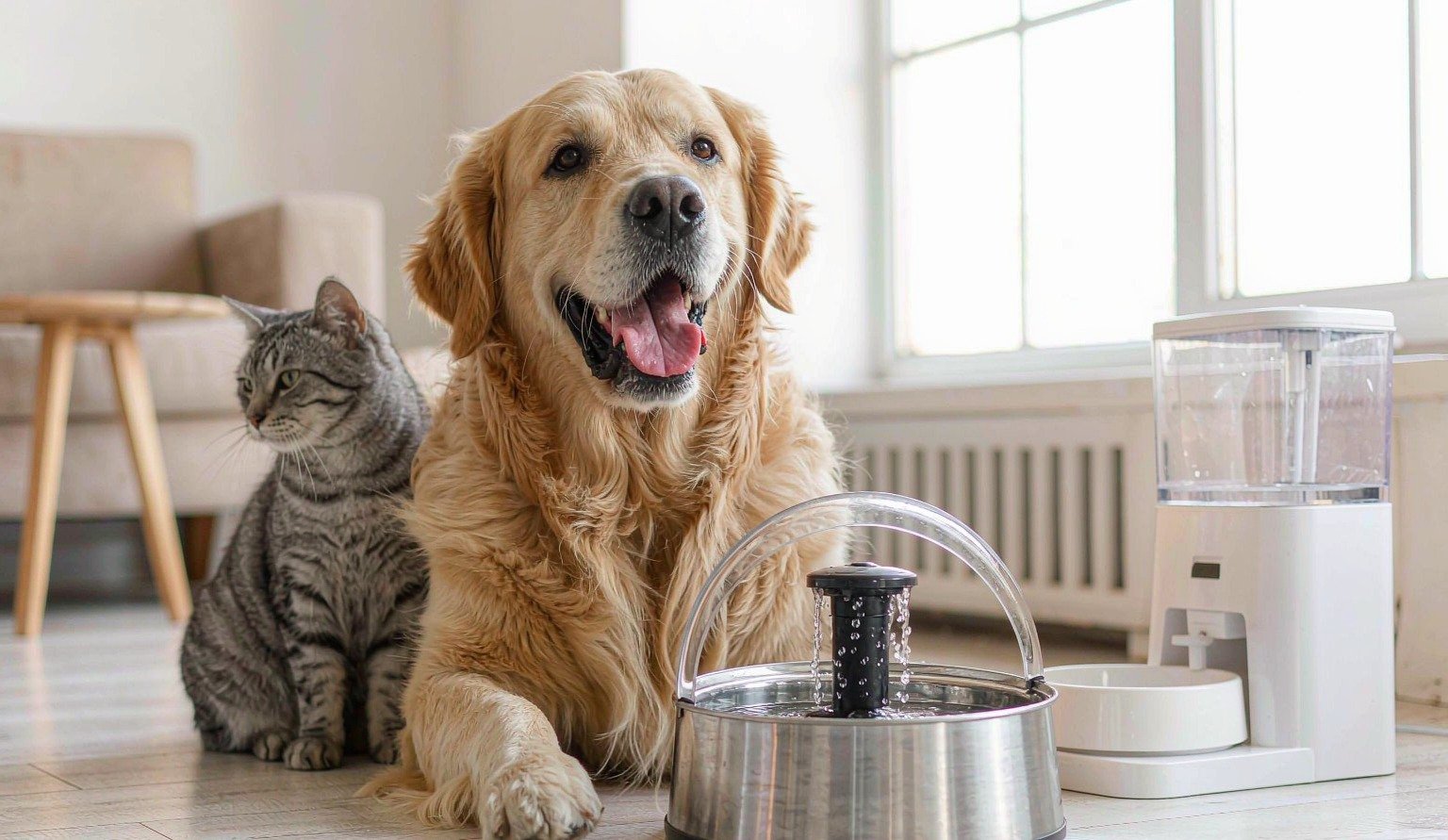
Smart pet products fail in the same place conventional ones do — at the pump, the motor and the sensor — but they fail with more ceremony, because a device that reports a fault still has to be cleaned, refilled and eventually replaced. This entry follows one ordinary day with a feeder, a fountain and a tracking collar, and records what actually needs doing at each step.
A day in the life, hour by hour
| Time | Routine | Device involved | Human task |
|---|---|---|---|
| 06:30 | First meal dispensed | Scheduled feeder | Confirm the portion actually dropped |
| 07:00 | Water bowl rinsed and refilled | Circulating fountain | Empty, rinse, refill, check flow |
| 09:00 | Walk | Tracking collar | Charge check before leaving |
| 13:00 | Play session | — | Ten minutes, same toy each day |
| 18:00 | Second meal | Scheduled feeder | Confirm the portion actually dropped |
| 20:00 | Hands-on check and weight note (weekly) | — | Two minutes |
| 21:00 | Filter and impeller inspection | Circulating fountain | Per the model’s stated interval |
Morning: the feeder does the timing, you do the verification
The reason to schedule feeding is not convenience but measurability. A feeder dispenses a known quantity at a known time, which converts appetite from an impression into a record.
The routine that matters is verification. Every dispense should be confirmed — visually for a carousel mechanism that drops pre-filled compartments, by weight or by checking the bowl for an auger mechanism that meters kibble through a tube. An auger that jams silently at 06:30 means the animal misses a meal without anyone noticing.
Two mechanism families dominate, and the choice affects daily life rather than the specification sheet. Auger screw feeders handle continuous portion sizes but can fracture brittle kibble. Rotating carousel feeders handle fixed portions and are easier to verify by eye. Our current models are listed under the smart feeder category; portion range in grams, meals per day and hopper capacity should be confirmed per model before ordering.
Water: the task you cannot automate away
A circulating fountain delays the need to intervene; it does not remove it. Moving water slows stagnation, and filtration reduces debris, but the reservoir still has to be emptied and rinsed, and the pump still has to be cleaned on a schedule.
Three facts decide how much work a fountain is: which parts may be immersed, which cleaning agents are compatible with the housing, and whether the pump is field-replaceable. The last one matters most over a product’s life — a unit with a replaceable impeller is repaired, one without is discarded.
Drive type is the other practical variable. An electromagnetic drive has fewer moving parts and tends to run more quietly; a submersible impeller pump moves more water but generates the noise and the wear. Both designs are represented in our pet water fountain category, which spans reservoir-fed dispensers, stainless steel bowls and motion-sensing units.
Tracking collar: charge it, then trust the interval, not the feature list
A collar’s usefulness is set by its reporting interval, because the interval determines battery life and nothing else on the specification sheet does. A device reporting every thirty seconds is not the same product as one reporting every ten minutes, even if the packaging describes both as tracking collars.
The radio technology decides what the device can credibly claim:
- GPS gives outdoor position to within a few metres, works poorly indoors and draws the most power.
- BLE anchors are inexpensive and work indoors, but report presence near a known point rather than continuous position.
- RFID covers passive transponders — including LF 134.2 kHz chips read by a handheld scanner — used for identification rather than live tracking.
In a clinic or boarding setting, the practical habit is to charge on a fixed day and to check the boundary alert settings after any app update. Smart positioning products are grouped in their own section of the pet supplies range.
Evening: two minutes that make the devices worthwhile
A logged observation history — meals dispensed, water consumed, weight — is only useful if it exists consistently. The evening hands-on check is what produces it: same order every time, ears to tail, then the weight note on its scheduled day.
What breaks first, and how to plan for it
| Component | Typical failure mode | Planning response |
|---|---|---|
| Fountain pump / impeller | Noise, reduced flow, seizure | Keep a spare pump per unit; check availability before ordering |
| Feeder auger / carousel drive | Jammed dispense, missed meal | Daily visual verification; confirm power-interruption behaviour |
| Collar battery | Runtime shorter than stated interval allows | Fixed charging day; runtime quoted at a stated interval, not as a maximum |
| Filters and seals | Flow restriction, leakage | Treat as a consumable line item, not an accessory |
Across a facility, standardising on one or two models per function matters more than optimising each room individually. Identical units mean one cleaning procedure, one spare-parts list and comparable records between staff.
Frequently asked questions
Do smart feeders work without Wi-Fi?
On-device scheduling does not require connectivity, but app control, feeding logs and remote alerts do. Confirm per model which functions depend on the network, and what happens to the schedule during an outage.
What happens to a feeder during a power cut?
Units with an internal battery continue on a backup supply whose duration varies by model, and battery-only units are unaffected by mains failure but dependent on charge state. Backup runtime should be confirmed per specification rather than assumed.
Is a smart collar a replacement for a microchip?
No. A microchip is a passive transponder read by a scanner and remains the established identification method in most clinical settings. A collar reports position and activity. The two are normally used together, not as alternatives.
How many fountains does a boarding facility need?
Base the count on the number of animals per drinking station, the cleaning interval you can realistically staff, and reservoir volume. Two smaller units that are cleaned daily are more useful than one large unit that is cleaned weekly.
Sourcing these for a facility or a retail range
If you are specifying smart pet living products for a clinic, a boarding ward or a distributor range, send the animal sizes, the number of stations and the volumes involved. We will confirm model fit, the parameters that need written confirmation and the minimum order quantity for the configuration — including OEM and ODM options where a private label is required.